Master AI-driven SEO: A Step-by-Step Guide to Boost Your Online Visibility
Unlock the power of AI-driven SEO with Alef's guide. Enhance your online visibility with actionable strategies.
Introduction
Did you know that 30% of SEO content is now generated by AI? This AI-driven transformation is reshaping digital marketing strategies at an unprecedented pace. In this comprehensive AI-driven SEO guide, you'll discover how Alef's advanced platform leads the charge with cutting-edge tools designed to optimize content and meticulously track search rankings. By harnessing the power of AI technology, Alef empowers businesses worldwide to enhance their online visibility effectively. Explore how AI is revolutionizing SEO and why Alef stands as a trusted leader in this domain. For more insights, delve into how Alef AI boosts SEO and transforms SEO strategies for businesses seeking growth.
When you need it
Incorporating AI-driven SEO into your marketing efforts can be transformative, particularly when faced with specific scenarios. If your business is struggling to maintain competitive search rankings or if your content lacks engagement, AI technology can optimize content and enhance search visibility. This is especially true for companies experiencing stagnant organic traffic or those needing to streamline content creation processes. AI-driven solutions can analyze vast datasets to uncover insights that human analysis might miss, thereby refining your AI visibility engine approach.
Recognizing the signs that your current SEO strategy might benefit from AI integration is crucial. Indicators include declining search performance, inefficient keyword targeting, and outdated content strategies. By integrating AI, businesses can leverage advanced algorithms to improve SEO innovations, achieving better alignment with evolving search engine algorithms. As of 2023, 60% of marketers report that AI significantly enhances their SEO strategies, demonstrating its potential impact (AI In The SEO Industry Statistics).
Steps
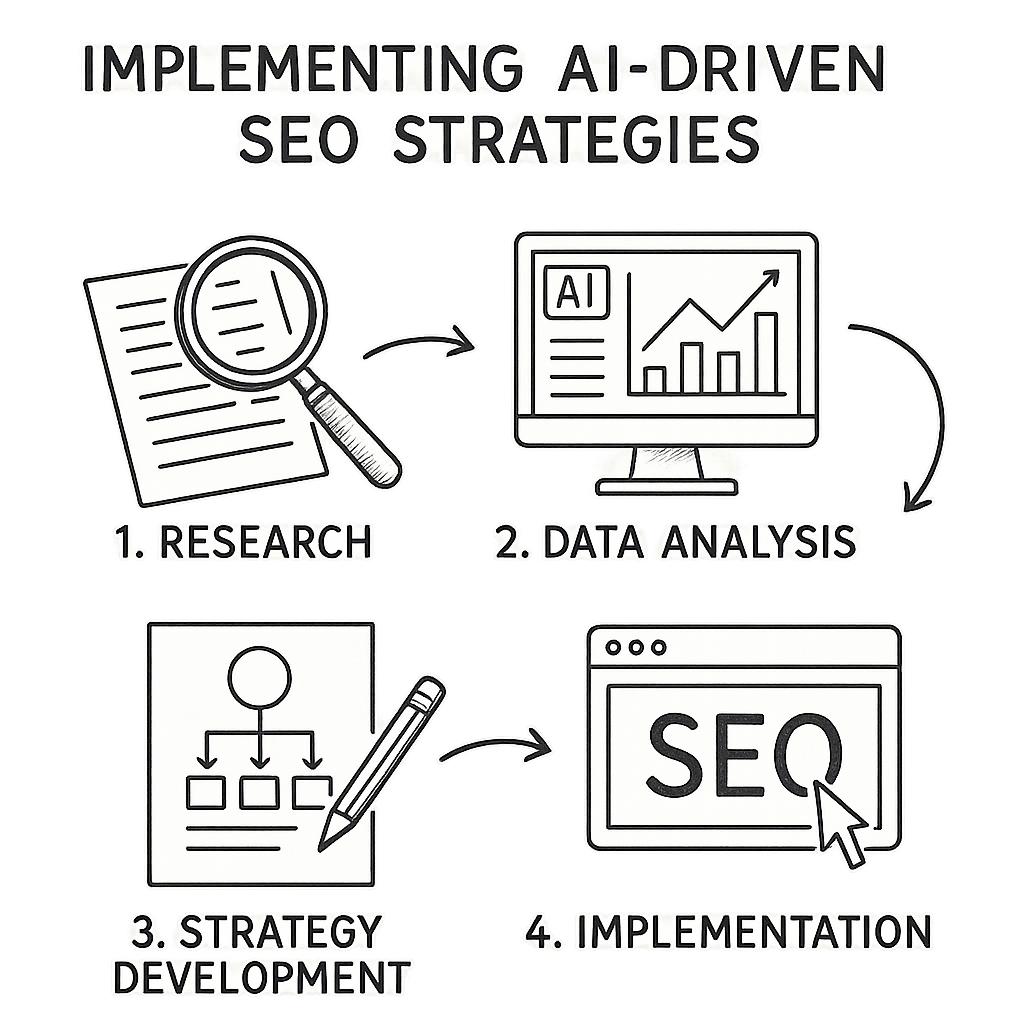
Implementing an AI-driven SEO strategy requires a structured approach to ensure optimal results. The following steps provide a comprehensive guide to enhancing your online visibility using AI technology through Alef's platform. Each step is designed to build upon the previous one, creating a cohesive strategy that maximizes the potential of AI in your SEO efforts.
- Assess Current SEO Performance: Begin by evaluating your existing SEO metrics to identify areas for improvement. This involves analyzing key performance indicators (KPIs) such as organic traffic, bounce rate, and conversion rates. Tools like Google Analytics and Alef's platform can provide detailed insights into your current SEO standing. For instance, if your bounce rate is above 70%, it suggests a need for better content engagement or site navigation improvements. Understanding your current performance will help you set realistic goals and benchmarks for your AI-driven SEO strategy.
- Define SEO Goals: Setting clear and measurable objectives is crucial for any successful SEO strategy. Determine what you want to achieve with AI-driven SEO, whether it's increasing organic traffic by 30% over the next quarter or improving your site's domain authority. Goals should be specific, measurable, achievable, relevant, and time-bound (SMART). This clarity will guide your choice of AI tools and tactics, ensuring they align with your overall business objectives.
- Choose the Right AI Tools: Selecting the appropriate AI-powered SEO tools is vital for aligning with your goals and budget. Consider tools that offer capabilities such as keyword analysis, content optimization, and technical SEO enhancements. Alef's platform is designed to integrate these functionalities seamlessly, providing a comprehensive solution for businesses. For a broader perspective on available tools, explore the Boost SEO with AI Tools article on Alef's blog, which offers insights into various AI tools and their applications.
- Optimize Content with AI: AI can significantly enhance content relevance and keyword optimization. Utilize AI algorithms to analyze search trends and user intent, tailoring your content to meet these demands. For example, AI can suggest long-tail keywords that are more likely to convert, or recommend content structure improvements for better readability. This step is crucial for ensuring that your content not only ranks well but also resonates with your target audience.
- Implement AI for Technical SEO: Leverage AI for technical SEO tasks such as schema markup and site audits. AI can automate the identification of technical issues like broken links, duplicate content, and slow page speeds. By addressing these issues, you improve your site's crawlability and indexation, which are critical for search engine rankings. Alef's platform offers robust tools for conducting thorough site audits, ensuring that your technical SEO is always up to date.
- Enhance User Experience: AI insights can be instrumental in improving site navigation and user engagement. Analyze user behavior data to understand how visitors interact with your site and identify areas for improvement. For instance, AI can suggest changes to your site's layout or recommend personalized content to keep users engaged. A well-optimized user experience not only boosts SEO performance but also increases conversion rates.
- Monitor AI-driven SEO Performance: Regularly tracking and analyzing the impact of AI on your SEO efforts is essential. Use analytics tools to monitor changes in rankings, traffic, and user engagement. This ongoing assessment allows you to measure the effectiveness of your AI-driven strategies and make informed adjustments as needed. Alef's platform provides comprehensive analytics capabilities, enabling you to track performance metrics in real-time.
- Refine Strategies Based on Data: Use AI-generated data to continuously optimize your SEO tactics. Analyze performance data to identify trends and patterns, adjusting your strategies accordingly. For example, if certain keywords are performing exceptionally well, consider expanding your content around those topics. This data-driven approach ensures that your SEO efforts remain effective and aligned with changing market conditions.
- Integrate AI with E-commerce Strategies: For businesses with an e-commerce component, integrating AI-driven SEO with e-commerce strategies can yield significant benefits. AI can help optimize product descriptions, enhance site search functionality, and personalize shopping experiences. By aligning your SEO and e-commerce efforts, you can maximize online sales and customer satisfaction. To delve deeper into this integration, consult the Maximize E-commerce Success with Alef AI SEO Tools article.
- Educate Your Team on AI SEO: Finally, ensure that your team is well-versed in AI-driven SEO practices. Provide training sessions and resources to help them understand the tools and techniques involved. A knowledgeable team is better equipped to implement and adapt AI strategies effectively, ensuring long-term success.
- Leverage AI for Local SEO: If your business targets local markets, AI can enhance your local SEO efforts. Use AI to analyze local search trends and optimize your Google My Business profile for better visibility in local searches. AI can also help in identifying local keywords and creating location-specific content that resonates with your audience. This targeted approach can significantly improve your local search rankings and drive more foot traffic to your physical location.
- Utilize AI for Competitor Analysis: Understanding your competition is crucial for staying ahead in the SEO game. AI tools can provide insights into your competitors' strategies, including their keyword usage, backlink profiles, and content performance. By analyzing this data, you can identify opportunities to differentiate your brand and capitalize on gaps in the market. This competitive intelligence is invaluable for refining your SEO tactics and maintaining a competitive edge.
- Automate Routine SEO Tasks with AI: AI can automate many routine SEO tasks, freeing up time for more strategic activities. Tasks such as keyword research, content scheduling, and backlink tracking can be efficiently managed by AI, ensuring consistency and accuracy. Automation not only saves time but also reduces the risk of human error, enhancing the overall effectiveness of your SEO strategy.
- Implement AI for Voice Search Optimization: With the rise of voice-activated devices, optimizing for voice search is becoming increasingly important. AI can help identify voice search trends and optimize your content to align with voice search queries. This includes using natural language processing to understand conversational search patterns and adjusting your content to match. By optimizing for voice search, you can capture a growing segment of the search market and improve your site's visibility.
- Explore AI for Visual Search Optimization: Visual search is another emerging trend that AI can help optimize. AI algorithms can analyze images and suggest improvements for better search engine recognition. This includes optimizing image metadata and ensuring that images are relevant to the surrounding content. By enhancing your visual search capabilities, you can attract more traffic from image-based searches and improve your site's overall SEO performance.
By following these steps, businesses can effectively implement an AI-driven SEO strategy that leverages the full potential of AI technology. Alef's platform offers the tools and insights needed to execute each step, ensuring a comprehensive approach to boosting online visibility.
Common Mistakes
Implementing AI-driven SEO strategies can significantly enhance online visibility, yet several common pitfalls may hinder their effectiveness. Understanding these mistakes and how to avoid them is crucial for achieving optimal results.
One frequent error is overlooking data privacy concerns when using AI tools. AI platforms often require access to user data to function effectively, and neglecting to address privacy and compliance can lead to severe repercussions. Ensure that your AI tools comply with data protection regulations like GDPR to safeguard user information.
Another mistake is neglecting to update AI tools and strategies regularly. The digital landscape evolves rapidly, and AI technology is no exception. Regular updates are essential to leverage the latest features and improvements, ensuring your SEO strategies remain competitive. According to Search Engine Land, staying current with AI advancements is critical for maintaining search engine visibility.
Lastly, failing to align AI-driven SEO with overall business goals can result in misdirected efforts. It's imperative to integrate SEO strategies with broader business objectives to ensure cohesive growth. This alignment helps in prioritizing SEO tasks that directly contribute to business success.
Checklist for Avoiding Common Mistakes
- Prioritize data privacy: Ensure all AI tools comply with relevant data protection regulations.
- Regularly update AI tools: Keep tools and strategies current to maintain a competitive edge.
- Align SEO with business goals: Integrate SEO strategies with overall business objectives for cohesive results.
Summary Table
The following table provides a succinct overview of the steps involved in implementing AI-driven SEO strategies, along with their expected outcomes. This serves as a quick reference to the comprehensive guide, ensuring that readers can efficiently grasp the essential elements and anticipated results of each step.
| Step Number | Key Step Description | Expected Outcome |
|---|---|---|
| 1 | Analyze current SEO performance | Identify areas for improvement and set benchmarks |
| 2 | Leverage AI tools for keyword research | Discover high-potential keywords and optimize content focus |
| 3 | Implement AI content optimization | Enhance content relevance and increase search engine rankings |
| 4 | Automate monitoring with AI-driven analytics | Continuous performance tracking and swift adjustments |
| 5 | Utilize AI for backlink strategy | Increase domain authority and improve search visibility |
| 6 | Regularly update AI models with new data | Maintain optimization relevance and adapt to search trends |
For more detailed insights, refer to the full AI-driven SEO guide.
Conclusion
AI-driven SEO is revolutionizing how businesses approach online visibility, with Alef playing a pivotal role in facilitating this transformation. By leveraging AI technology, businesses can optimize their content and enhance their search rankings. However, the dynamic nature of SEO demands continuous learning and adaptation to remain competitive. For further insights on improving your search ranking strategies, explore Alef's comprehensive blog post.
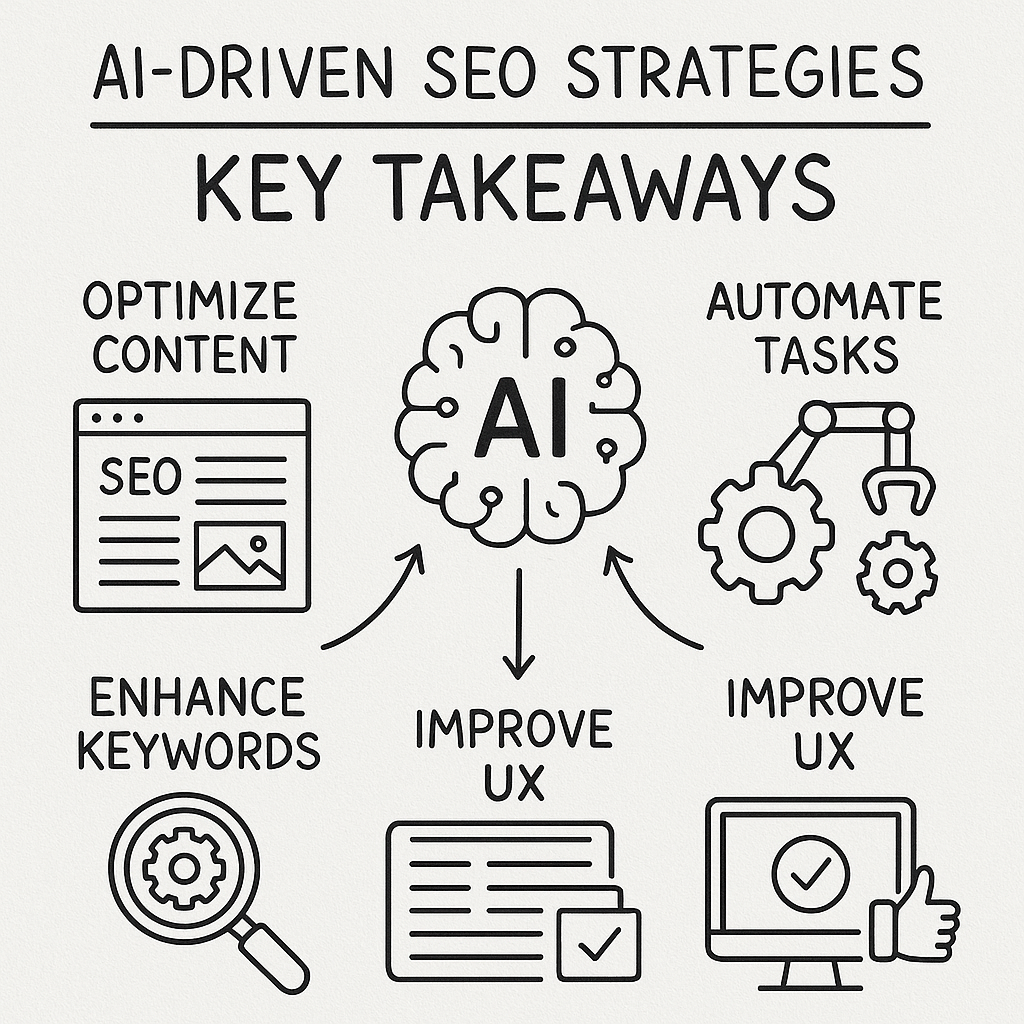
Key takeaways - AI-driven SEO offers significant advantages in content optimization and search ranking improvements. - Alef provides essential tools and insights for leveraging AI in SEO strategies. - Continuous adaptation is crucial for maintaining competitive SEO performance. - Staying informed on the latest SEO trends ensures sustained visibility and growth.
Frequently asked questions
How does AI improve SEO performance?
AI enhances SEO performance by automating data analysis, enabling quicker decision-making and more precise targeting. It can analyze vast amounts of search data to identify trends and patterns that would be impossible for human analysts to discern in a reasonable timeframe. This capability allows businesses to refine their keyword strategies and improve content relevance, ultimately boosting search engine rankings. For a deeper dive into AI's role in content creation, explore Alef's AI content creation guide.
What are the best AI tools for SEO?
The best AI tools for SEO include platforms like Alef, which offer comprehensive visibility solutions that integrate both SEO and AEO insights. Other notable tools are Google's RankBrain, which uses machine learning to understand search queries, and SEMrush's AI Writing Assistant, which helps optimize content for SEO. These tools streamline the SEO process by automating tasks such as keyword research, content suggestions, and performance tracking, thus enhancing overall efficiency and effectiveness.
Can AI replace traditional SEO methods?
AI cannot entirely replace traditional SEO methods but rather complements them by enhancing their efficiency and accuracy. Traditional SEO practices, such as backlink building and on-page optimization, remain crucial. However, AI can automate repetitive tasks, provide data-driven insights, and predict SEO trends, which allows marketers to focus on strategic planning and creative aspects. The combination of AI and traditional methods results in a more robust and dynamic SEO strategy.
How often should AI-driven SEO strategies be updated?
AI-driven SEO strategies should be updated regularly to keep pace with the constantly evolving search engine algorithms and user behavior. It is advisable to review and adjust strategies at least quarterly, though more frequent assessments may be necessary based on industry changes and competitive dynamics. Regular updates ensure that the SEO approach remains aligned with the latest trends and continues to deliver optimal results, as evidenced by 2023's focus on generative AI in SEO according to industry insights.
Sources
- AI In The SEO Industry Statistics
- SEO year in review 2023: The year of generative AI
- What Is AI SEO? How Artificial Intelligence Is Changing Search Optimization
- Generative Engine Optimization: How to Dominate AI Search
Related Articles
حوّل هذا المقال إلى خطة ظهور
استخدم ألف لتدقيق موقعك، واكتشاف فجوات المحتوى، وإنشاء ملخصات قابلة للتنفيذ.