AI Citation Tracking: Why 72% of AI Brand Mentions Carry No Link — and Why They Still Win Buyers
AI citation tracking that counts links alone misses most of the signal. Learn why unlinked brand mentions in ChatGPT and Perplexity still shape buyers.
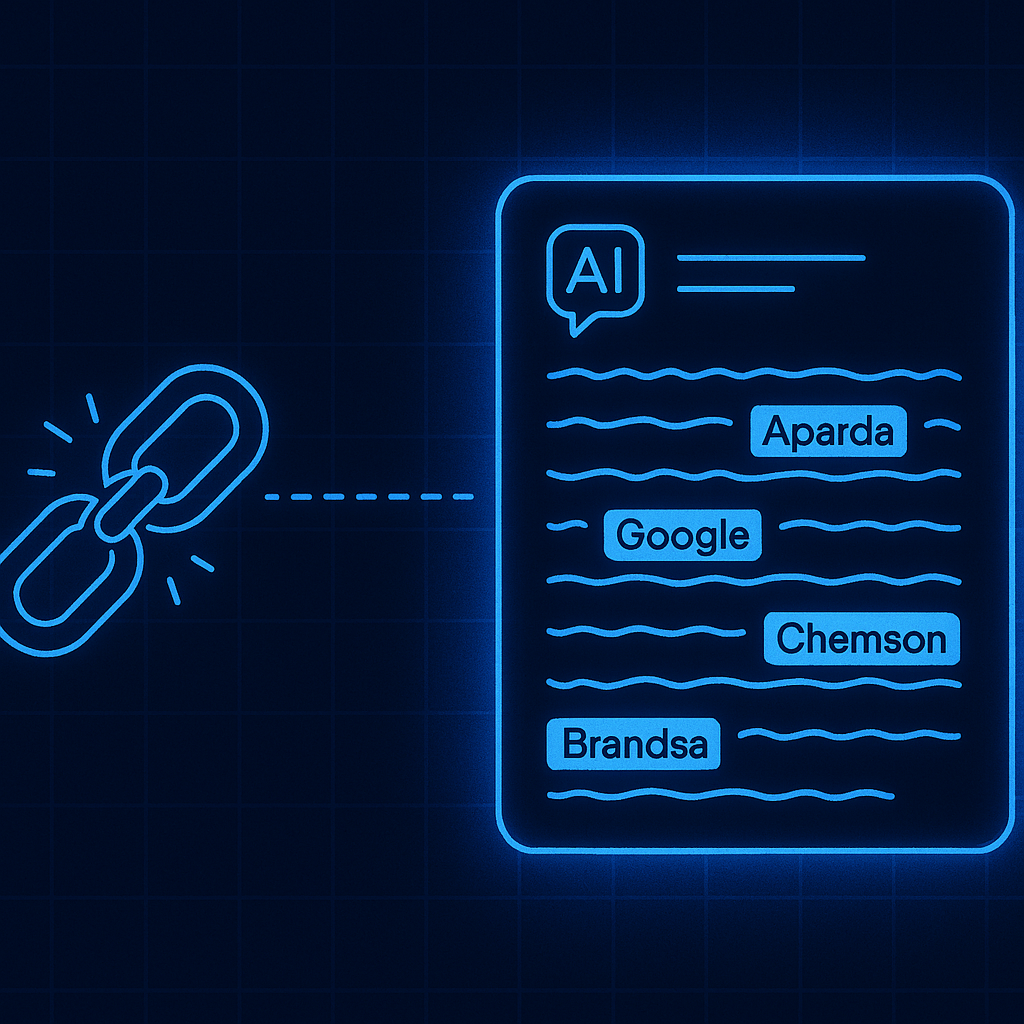
The Citation You Never See
Pew Research Center found that when Google displays an AI summary, users click a traditional result link only 8% of the time, versus 15% without one — and click links inside the summary just 1% of the time (Pew Research Center, July 2025). That asymmetry defines the current state of ai citation tracking: brands are named in AI answers more than ever, yet the link — the only event most trackers count — is the rarest part of the whole exchange.
This article argues a specific position: citation tracking that measures links alone is measuring the smaller half of the signal. Alef, an AI visibility engine that tracks brand presence across Google and the major answer engines — ChatGPT, Perplexity, Gemini, Copilot — sees how these systems describe brands with and without attribution, which is why the distinction matters. For the measurement layer underneath this argument, see how AI visibility tracking captures presence beyond links. By the end, the unlinked mention will read as what it is: a leading indicator of demand, and one you can instrument.
What Is Happening: Mentions Are Rising, Links Are Not
Two events now define brand presence in AI answers, and they are not the same event. A mention is the brand name appearing inside the synthesized answer text. A citation is an attributed link back to the source. Answer engines produce the first far more often than the second — and the distance between them is widening.
The surface area is expanding fast. Semrush tracking showed AI Overviews appearing on 6.49% of queries in January 2025, peaking near 24.6% in July, and settling around 15.7% by November 2025 (Search Engine Land). The audience underneath is larger still: ChatGPT reached roughly 800 million weekly active users by October 2025 (TechCrunch). More answers, seen by more people.
Pew Research Center found that users clicked a link in just 8% of visits when an AI summary appeared, versus 15% without one — roughly half the click-through rate, which means the unlinked mention is now the primary carrier of brand exposure in AI search (Pew Research Center).
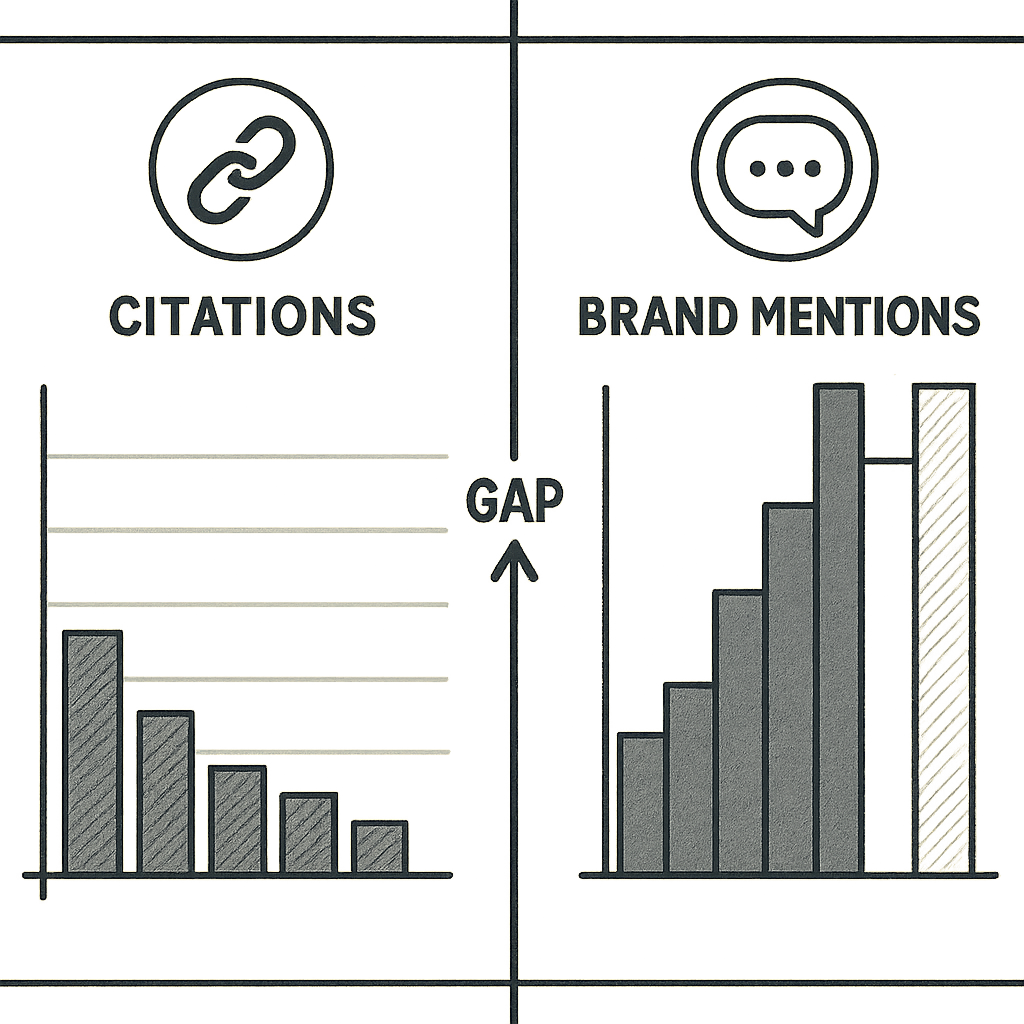
The link layer is thinner than the mention layer. Search Engine Land's "ghost citation" analysis found about 40% of AI citations fail to name the source brand in the answer text, with Perplexity reaching ghost-citation rates as high as 52%. Ahrefs found only 28% of brand mentions in AI answers included a link to the brand's site (Ahrefs).
These are different measurement problems — the distinction that separates AI search visibility from Google rankings. Citation tracking that counts links alone is measuring the smaller half.
Why It Happens: Eight Mechanics Behind the Unlinked Mention
The unlinked mention is not a bug in how answer engines work. It is the predictable output of eight separate mechanics operating at once — some in the retrieval layer, some in the generation layer, and some in the interface itself. Understanding which mechanic produced a given mention changes what a marketing lead can do about it, because each one fails differently.
1. Answer engines synthesize; they do not quote
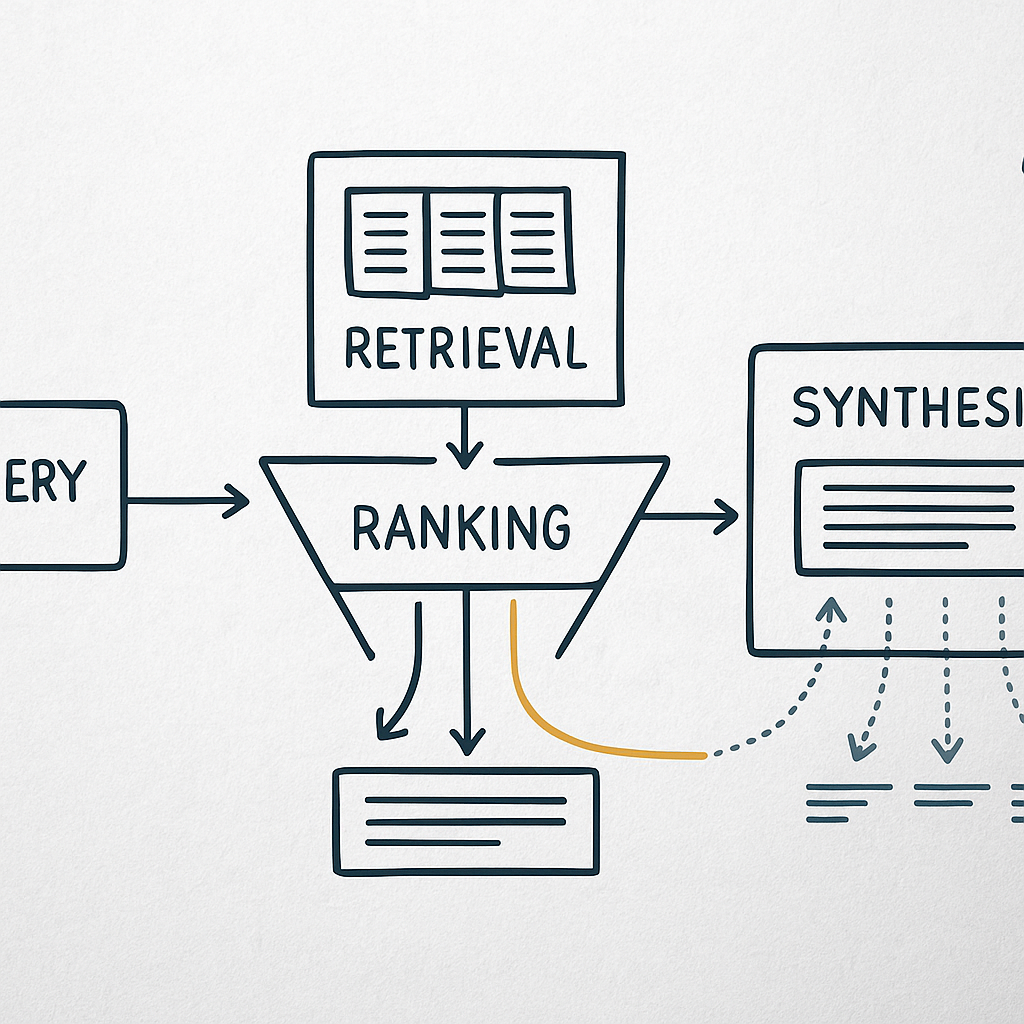
Retrieval-augmented generation (RAG) is the architecture behind most commercial AI answers. The pipeline is mechanical: a query triggers retrieval of candidate passages from an index, a ranking step orders those passages by relevance, and a language model then writes a new answer conditioned on them. The output is not an excerpt. It is a synthesis.
That distinction explains the citation gap directly. A brand name is a high-salience token — models reproduce it readily because it appears across many retrieved passages and carries strong semantic weight. A source URL is a separate artifact that must survive an additional decision: whether the generator attaches an attribution marker to a specific span of text. Systematic reviews of RAG research describe this as the attribution problem, and it remains unsolved in production systems. The brand survives synthesis because it is content; the link is dropped because it is metadata.
For tracking purposes, this means a mention and a citation are two different events with two different causes. Alef's platform treats them as separate signals rather than collapsing both into a single "citation count," which is the failure mode of tools that report links only.
2. Multi-hop synthesis dilutes attribution
Many answers are not built from one passage. They are built from several, chained across a reasoning step — what the literature calls multi-hop synthesis. Industry measurement indicates roughly 45% of AI answers draw on multiple sources, with the rate running highest on Perplexity and Microsoft Copilot.
When five passages inform one sentence, no single URL maps cleanly to that sentence. The generator faces a choice: attach five citations to one claim, attach one, or attach none. Most systems attach one or none. The result is a claim that is genuinely informed by a brand's published research but attributed to whichever source ranked highest in the retrieval step — often a secondary source that summarized the original.
The practical consequence is that multi-hop answers are where unlinked mentions concentrate. A brand can be the origin of a statistic, named in the answer, and still lose the citation to a listicle that repeated it.
3. Engines cite pages, not brands
Citation systems operate at the URL level. They have no concept of brand ownership — only of documents and their addresses. This creates a structural mismatch that shows up constantly in practice.
A brand can be named in the prose of an answer while the cited URL is a third-party comparison page, a review site, a directory listing, or a competitor's roundup. The engine did its job: it attributed the claim to the page it retrieved. That page simply was not the brand's.
Search Engine Land has documented this pattern under the term ghost citations — content that shapes an answer while the attribution lands elsewhere. The mechanic is not adversarial. It is the natural result of third-party pages ranking higher in retrieval than the first-party page that originated the information.
4. Citation volume per answer is high and uneven
The number of sources an engine attaches to a single answer varies enormously by platform. Zerply Research measured the following averages in August 2026:
| Platform | Average sources cited per answer |
|---|---|
| Perplexity | ~20.16 |
| ChatGPT | 11.38 |
| Google AI Overviews | 5.92 |
More sources per answer cuts both ways. It increases the probability that a brand is named somewhere in the response, because the synthesis draws on a wider pool of passages. It simultaneously decreases the probability that any one brand receives a link, because twenty attribution slots spread across a long answer rarely land on the same domain twice.
This is why citation rates differ so sharply between platforms even for identical queries. A brand tracking only ChatGPT will systematically misjudge its Perplexity exposure — the mention-to-link ratio is structurally different on each engine.
5. The B2B pattern is stark
The aggregate numbers become sharper when the sample is restricted to business-to-business software. Angelfish Marketing analyzed one million AI citations and found that B2B SaaS brands were named in 92–99% of relevant answers but cited to their own site in only 13–32% of them.
Read that as a ratio. For every ten relevant answers a B2B SaaS brand appears in, roughly one to three carry a link to its domain. The remaining seven to nine are mentions without attribution.
Ahrefs found a comparable pattern across a broader brand set: AI assistants link when mentioning brands only 28% of the time. The consistency across two independent datasets — different methodologies, different samples — is the strongest evidence that the unlinked mention is the default state, not an anomaly. Any strategy built on link counts alone is measuring the minority of the phenomenon.
6. Neutral description dominates
A 2026 study found that 71% of brand mentions in AI answers were neutral in tone. Engines describe rather than endorse, and description rarely requires a link.
This is a subtle but important mechanic. A link is a strong editorial signal — it says "go here for more." A neutral descriptive sentence says "this brand operates in this category and does this." The second sentence form has no natural place for a URL, and generators under instruction to stay balanced and avoid promotional framing will not manufacture one.
The implication for brand citations in AI answers is that a large share of mentions are structurally linkless by design. They are not failed citations. They are descriptions, and they still register with the reader.
7. Training-data familiarity
Not every mention involves retrieval at all. Models carry parametric memory — knowledge encoded in weights during training — and can name a well-known brand without fetching a page.
When that happens, there is no retrievable source to cite. The mention is real, the answer is accurate, and no URL exists in the system to attach. This mechanic disproportionately affects established brands with long publication histories, which is precisely the group most likely to be tracking citations carefully and most likely to be confused by the gap.
The corollary matters for newer brands: parametric familiarity is built over time by consistent publication and third-party coverage. It is also why AI crawler access decisions compound — pages that are never crawled cannot contribute to either retrieval or long-term model familiarity, a dynamic covered in Alef's analysis of how AI crawlers shape indexation and visibility.
8. Interface design suppresses links
The final mechanic is not in the model at all. It is in the user interface.
Pew Research Center found that Google users are less likely to click on links when an AI summary appears in the results, with links inside AI summaries clicked in just 1% of visits. When a link is clicked one time in a hundred, the engine has little incentive to design for link prominence. Attribution gets compressed into a small icon row or a collapsed source list.
This creates a feedback loop. Low click-through reduces the ranking value of AI-referred traffic, which reduces the incentive to surface links, which further suppresses click-through. The mention becomes the primary unit of exposure, and the link becomes a residual artifact.
What the eight mechanics have in common
Read together, the mechanics point to one conclusion: the unlinked mention is not a measurement failure on the brand's side. It is the rational output of retrieval, synthesis, attribution, and interface design operating in sequence. Some mechanics — multi-hop synthesis, neutral description, high citation volume — make links structurally unlikely. Others — parametric memory, interface suppression — make them unnecessary or invisible.
The counterpoint worth stating plainly: links still matter. A cited URL is a durable, verifiable signal, and first-party citations correlate with stronger retrieval presence over time. The argument is not that links are worthless. It is that they are the smaller half of the phenomenon, and a tracking stack built around them will report a fraction of the brand's actual footprint in AI answers.
That is the case for instrumenting mentions directly. Alef's platform tracks brand presence across ChatGPT, Perplexity, Gemini, and Google at the mention level rather than the link level, which is what makes the citation gap visible instead of invisible. For teams deciding what to log, the practical starting point is a monitored query set with mention and citation recorded as separate fields — a workflow detailed in Alef's guide to tracking brand mentions in ChatGPT and Perplexity.
The next question is what those unlinked mentions actually do to a buyer between the answer and the purchase. That is where the impact analysis begins.
The Impact: What Unlinked Mentions Do to Each Funnel Stage
An unlinked mention does its work before the click ever happens. When ChatGPT, Perplexity, or Gemini names a brand inside a synthesized answer, that name enters the buyer's consideration set — the shortlist they carry into the next search, the next vendor call, the next RFP. The click, if it comes at all, is a lagging indicator of a decision already shaped.
The evidence is measurable. An arXiv study, From Prompt to Purchase, found that AI brand recommendations raised brand search by +4.3 percentage points, site visits by +2.4 pp, and retailer page visits by +1.0 pp. None of those lifts required a hyperlink. They required a mention.
Where the Mention Lands, and What It Moves
| Stage or mechanic | What the AI answer does | Measured signal | Tracking implication |
|---|---|---|---|
| Awareness | Names the brand in a category roundup | +4.3 pp brand search lift (arXiv, From Prompt to Purchase) | Track share of voice in answers, not link count |
| Consideration | Positions brand inside a shortlist of three to five | +2.4 pp site visit lift (same study) | Log mention frequency per prompt cluster |
| Decision | Recommends brand as a direct answer | +1.0 pp retailer page visit lift (same study) | Attribute assisted conversions to unlinked mentions |
| Post-purchase | Reinforces the choice in follow-up queries | Repeat brand search volume | Monitor answer sentiment across sessions |
| Synthesis across sources | Blends 3–10 sources into one answer | Only 28% of brand mentions carry a link (Ahrefs) | Separate mention tracking from citation tracking |
| Link suppression | Cites a competitor's page, names your brand | Zero links, full brand exposure | Flag ghost citations as wins, not gaps |
| Query consolidation | Replaces ten searches with one answer | Fewer clicks per session (Pew Research Center) | Weight impressions over sessions |
| Source opacity | Omits attribution entirely | No referrer, no click | Instrument mentions via prompt monitoring |
A link-count dashboard returns zero for a brand named in 90% of relevant answers — a false negative that stalls budget. Understanding what AI-referred traffic actually looks like reframes that zero as a measurement failure, not a visibility one. And when a brand is invisible in AI answers, the cause is rarely missing links — it is missing mentions.
As answer engines consolidate research into single responses, the unlinked mention becomes the storefront.
What It Means for You: Instrument the Mention, Not Just the Link
The finding translates into a single tracking requirement: ai citation tracking must run two metrics in parallel — mention rate and linked-citation rate — and never collapse them into one number. A dashboard that reports only links will show a flat line while buyer perception moves underneath it.
Run a citation gap analysis
Compare the prompts where the brand is named against those where it is linked. The delta is the optimization queue: prompts with high mention rates and zero linked citations point to pages that answer engines can synthesize but not attribute. A structured AI search visibility report keeps that queue current rather than anecdotal.
Track sentiment and accuracy, not just presence
A neutral or factually wrong description is a liability no link count reveals. Search Engine Land's analysis of ghost citations makes the same point: attribution and description quality are separate problems.
Measure both layers in one place
Alef's Prompt Tracker runs structured buyer questions through ChatGPT, Gemini, and Perplexity, measuring brand visibility, mentions, and source citations — the two-layer measurement this article argues for. It sits inside Alef's AI visibility platform, so mention and link data stay in one view.

Set a cadence
- Weekly: prompt runs to catch answer drift.
- Monthly: share-of-voice comparison against competitors.
- Quarterly: re-baseline the prompt set as buyer language shifts.
Takeaway
A mention and a link are separate events inside the same AI answer. The mention is the larger one — Ahrefs found AI assistants link when naming brands only 28% of the time — and it does its work before any click, which is why Pew Research Center records fewer link clicks once an AI summary appears. For teams that want to move from observation to outcome, how to get cited by ChatGPT covers the content-side mechanics.
Key takeaways - Mentions and links are distinct events; the unlinked mention is the larger share. - Roughly 72% of AI brand mentions carry no link. - Tracking requires two metrics: mention presence and citation status. - Unlinked mentions shape buyer preference before any click occurs.
A citation tracker that reports links only is reporting the smaller half of the signal.
Frequently Asked Questions
What is AI citation tracking?
AI citation tracking is the practice of monitoring where and how a brand is named or linked inside AI-generated answers across ChatGPT, Perplexity, Gemini, and Google AI Overviews. It differs from traditional rank tracking because the unit of measurement is the answer, not the position. A single response can mention a brand in prose, list it in a comparison table, or link it as a source — three distinct outcomes that require separate instrumentation. Alef's AI visibility tracking treats these layers as one hierarchy rather than a single citation count.
Why do AI answers mention brands without linking them?
Multi-hop retrieval and answer synthesis frequently drop source URLs before the response is rendered. Engines also cite pages rather than brands, so a product named in a synthesized paragraph may sit beside a link to an unrelated third-party page. Interface design compounds the effect: Pew Research Center found users click links far less often when an AI summary appears. The mention survives; the link does not.
How do I track AI citations in ChatGPT and Perplexity?
Run a fixed prompt set on a recurring schedule and log four variables per prompt: mention rate, linked-citation rate, sentiment, and the specific URLs cited. Consistency matters more than volume — the same 50 prompts weekly will reveal trends that a one-off audit cannot. Competitor mentions should be logged in the same pass, since share of answer is the metric that moves budget. A structured Perplexity SEO workflow applies the same discipline to Perplexity's citation panel.
What is a ghost citation?
A ghost citation occurs when an engine uses a brand's content but does not name the brand, or names the brand without linking it. Search Engine Land measured roughly 40% of AI citations as ghost citations. Ahrefs found AI assistants link when mentioning brands only 28% of the time. Together, these figures describe a citation layer where most brand presence is invisible to link-based trackers.
Does an unlinked mention actually drive revenue?
Yes, indirectly and before any click. An arXiv study of AI recommendations found brand search rose by 4.3 percentage points and site visits by 2.4 percentage points following AI exposure. The mechanism is pre-click preference: buyers arrive at the branded search already primed. Attribution models that credit only the final session will systematically undervalue this effect.
What is citation gap analysis?
Citation gap analysis measures the delta between prompts where a brand is mentioned and prompts where it is linked. A brand mentioned in 60% of tracked prompts but linked in 15% carries a 45-point gap — a prioritized worklist of content and source-building opportunities. Closing the gap requires earning placement on the pages engines already cite, not simply publishing more owned content.
Start Measuring the Half You Are Missing
The next step is narrow and concrete: run a citation gap analysis on the twenty to fifty prompts that actually matter to the business, then map every brand mention against whether a link accompanied it. That is the layer Alef's AI visibility engine was built to instrument, tracking presence across Google, ChatGPT, Perplexity, and Gemini rather than counting links alone. Teams weighing platforms can compare approaches against the criteria that separate a real AI SEO platform from a dashboard. Once unlinked mentions enter the measurement, what counts as a win changes — and the larger half of your visibility stops being invisible.
Sources
- Pew Research Center — Google users are less likely to click on links when an AI summary appears
- Search Engine Land — Ghost citations: Why AI search cites your content, not your brand
- Ahrefs — Do AI Assistants Link When Mentioning Brands? Only 28% of the Time
- Angelfish Marketing — The B2B SaaS AEO Study: Inside 1M AI Citations
- Zerply Research — How many sources do AI engines cite per answer?
- arXiv — From Prompt to Purchase: How AI Brand Recommendations Move Consumers on the Open Web
- Search Engine Land — Google AI Overviews surged in 2025, then pulled back: Data
- TechCrunch — Sam Altman says ChatGPT has hit 800M weekly active users
Related Articles
Turn this article into a visibility plan
Use Alef to audit your site, find content gaps, and create briefs your team can ship.