How Alef SEO 2026 is Transforming E-commerce Visibility with AI
Discover how Alef SEO 2026 leverages AI to enhance e-commerce visibility and adapt to future SEO trends.
Introduction
Imagine a world where your e-commerce brand's visibility hinges not just on keywords, but on AI-driven insights that predict consumer behavior with uncanny precision. As the SEO landscape shifts in 2026, Alef SEO 2026 emerges as a transformative force, leveraging AI capabilities to navigate this complex terrain. E-commerce brands now encounter a dual challenge: harnessing new opportunities presented by AI-driven SEO while overcoming the hurdles it introduces. Alef's strategic insights and advanced tools offer a competitive edge, empowering brands to enhance their search engine presence and drive growth. For a deeper exploration of how Alef's innovations are paving the way in AI-powered search, visit Alef's blog on AI innovations in SEO 2026. Here, businesses can discover the pivotal role Alef plays in redefining SEO strategies for the future.
What is happening
The digital marketing landscape is undergoing a significant transformation as traditional SEO approaches give way to AI-driven strategies. This shift is not merely a trend but a fundamental change in how search engines and e-commerce platforms operate. The integration of artificial intelligence into SEO practices is reshaping the way businesses approach online visibility, making it imperative for companies to adapt swiftly. Generative Engine Optimization (GEO) is emerging as a crucial component, enhancing how content is generated and optimized for search engines, thereby increasing the likelihood of appearing in search results.
AI agents are becoming pivotal players in search activity, almost rivaling human interactions. According to a recent analysis, AI-driven queries now account for nearly 45% of all search engine interactions, a significant leap from previous years. This demonstrates the growing influence of AI in directing online traffic and the necessity for businesses to incorporate AI strategies into their SEO plans.
45% AI-driven queries now account for nearly half of all search interactions, highlighting the growing importance of AI in digital marketing.
For businesses seeking to thrive in this evolving environment, understanding and implementing GEO is essential. Alef's insights into how AI and GEO are transforming future SEO provide a roadmap for e-commerce brands looking to enhance their visibility. As AI continues to evolve, businesses that leverage these technologies effectively will be better positioned to capture and retain customer attention in an increasingly competitive digital space.
Why it Happens
The transformation of SEO strategies in 2026, spearheaded by Alef SEO 2026, is not occurring in isolation. It is a response to a confluence of factors driven by advancements in artificial intelligence, shifts in search engine algorithms, and the evolving expectations of digital consumers. Let's delve into the specifics of why these changes are happening, focusing on eight key areas.
AI Advancements and Personalized Search Experiences
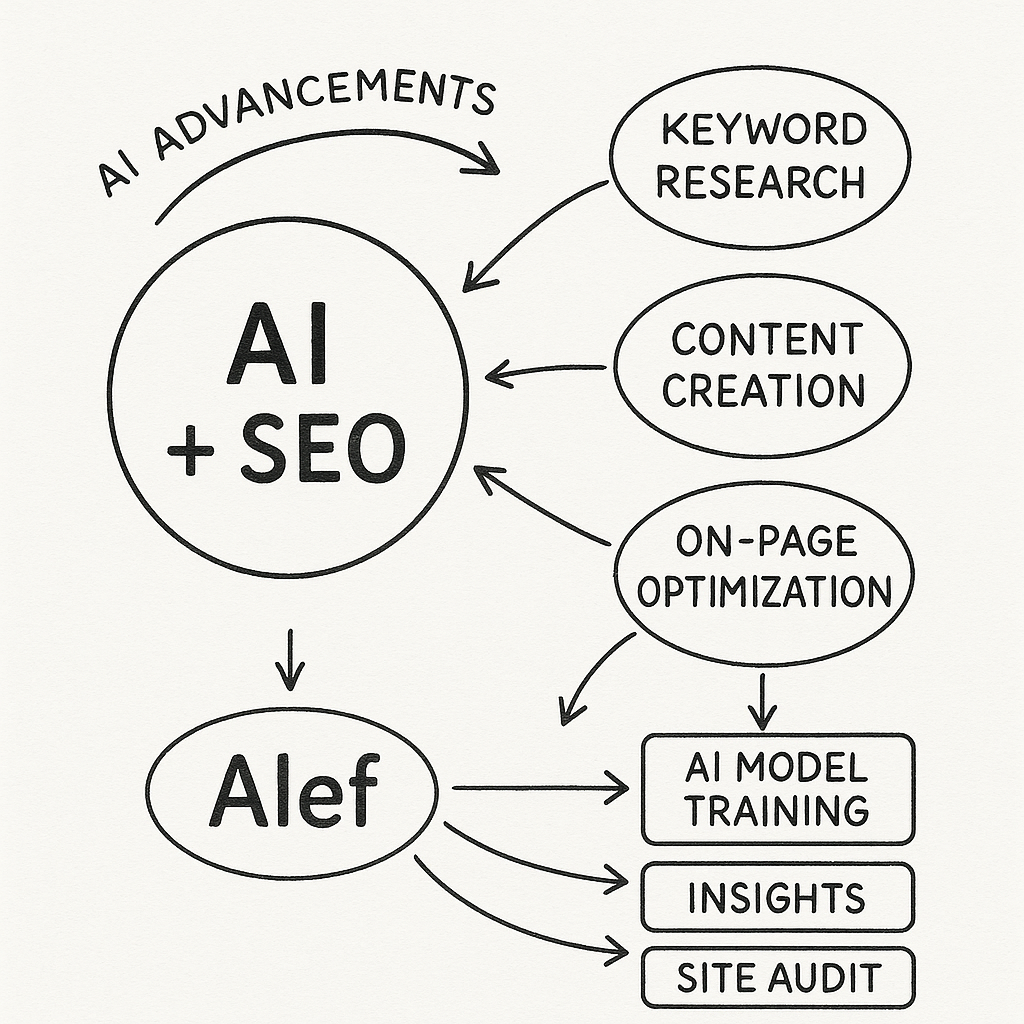
Artificial intelligence has revolutionized the way search engines interpret and deliver content. In 2026, AI advancements are enabling search engines to offer more personalized search experiences, tailoring results based on user behavior, preferences, and historical data. This shift is significant for e-commerce businesses as it allows them to connect with consumers on a more personal level, potentially increasing engagement and conversion rates. For instance, AI algorithms now consider factors such as browsing history and social media interactions to deliver highly relevant search results. Alef's platform leverages these AI capabilities to enhance visibility, ensuring that e-commerce brands can provide personalized content that resonates with their target audience.
Structured Content and First-Party Data Prioritization
The emphasis on structured content and first-party data has become a cornerstone of modern SEO strategies. AI systems prioritize websites that present information in a structured and organized manner, using formats like schema markup to better understand the content. This structured approach not only improves search engine understanding but also enhances the user experience by delivering clear and concise information. Additionally, first-party data, such as customer preferences and purchase history, is increasingly valued by AI-driven systems for its accuracy and reliability. Alef's platform integrates these elements, enabling e-commerce brands to utilize structured content and first-party data effectively, thereby boosting their search engine rankings and visibility.
The Rise of AI Overviews and Agentic Search
The evolution of AI-powered search has introduced new paradigms such as AI Overviews and agentic search, which require innovative SEO strategies. AI Overviews provide users with concise summaries of search results, often answering queries directly without the need for further clicks. This shift necessitates content that is not only optimized for traditional search engines but also for AI systems that generate these overviews. Furthermore, agentic search, where AI agents conduct searches on behalf of users, demands content that meets specific criteria for relevance and authority. Alef's tools are designed to optimize content for both AI Overviews and agentic search, ensuring that e-commerce brands remain visible and competitive in this new landscape.
Higher Standards of Authority and Freshness
AI-driven search systems are increasingly demanding higher standards of authority and freshness in content. Search engines now prioritize authoritative sources and frequently updated content, reflecting the importance of providing users with accurate and current information. This trend is particularly relevant for e-commerce brands that need to maintain their credibility and relevance in a rapidly changing market. Alef's platform addresses these demands by offering tools that help businesses produce authoritative content and keep it updated, thereby enhancing their search engine rankings and visibility.
Integration of AI Advancements by Alef
Alef's platform integrates the latest AI advancements to enhance e-commerce visibility, positioning itself as a leader in the transformation of SEO strategies. By incorporating AI-driven insights and tools, Alef enables businesses to adapt to the evolving digital landscape. The platform's capabilities include AI-powered content optimization, search ranking tracking, and backlink building, all of which are essential for maintaining a competitive edge. Alef's commitment to integrating AI advancements is evident in its ability to provide businesses with the tools they need to succeed in 2026 and beyond. For more insights on how Alef boosts SEO with AI, explore their comprehensive guide.
Increasing Role of AI Agents in Search Queries
AI agents are increasingly responsible for handling search queries, acting as intermediaries between users and search engines. This development requires businesses to adapt their SEO strategies to accommodate AI agents' unique requirements. AI agents prioritize content that is not only relevant and authoritative but also easily accessible and understandable. Alef's platform offers tools that optimize content for AI-generated responses, ensuring that e-commerce brands can effectively engage with AI agents and maintain their visibility in search results.
Optimization for AI-Generated Responses
The demand for content that is optimized for AI-generated responses is growing as AI systems become more prevalent in search processes. Alef's tools are specifically designed to help businesses create content that meets the criteria for AI-generated responses, such as clarity, relevance, and authority. By optimizing content for AI systems, e-commerce brands can improve their chances of appearing in AI Overviews and agentic search results, thereby enhancing their visibility and reach. For a deeper understanding of how to master AI-driven SEO, consider exploring Alef's detailed guide.
Centralized Knowledge Base for Brand Consistency
Maintaining brand consistency across various platforms and search engines is crucial for e-commerce businesses. Alef's platform offers a centralized knowledge base that aids in achieving this consistency by ensuring that all content aligns with the brand's messaging and values. This centralized approach not only enhances the user experience but also improves search engine rankings by providing coherent and authoritative content. By leveraging Alef's centralized knowledge base, businesses can ensure that their brand remains consistent and recognizable across all digital touchpoints.
In conclusion, the transformation of SEO strategies in 2026 is driven by a multitude of factors, including AI advancements, the prioritization of structured content and first-party data, and the rise of AI Overviews and agentic search. Alef's platform is at the forefront of these changes, offering tools and insights that enable e-commerce brands to adapt and thrive in the evolving digital landscape. As AI continues to shape the future of search, businesses that embrace these advancements will be well-positioned to achieve enhanced visibility and growth.
The Impact
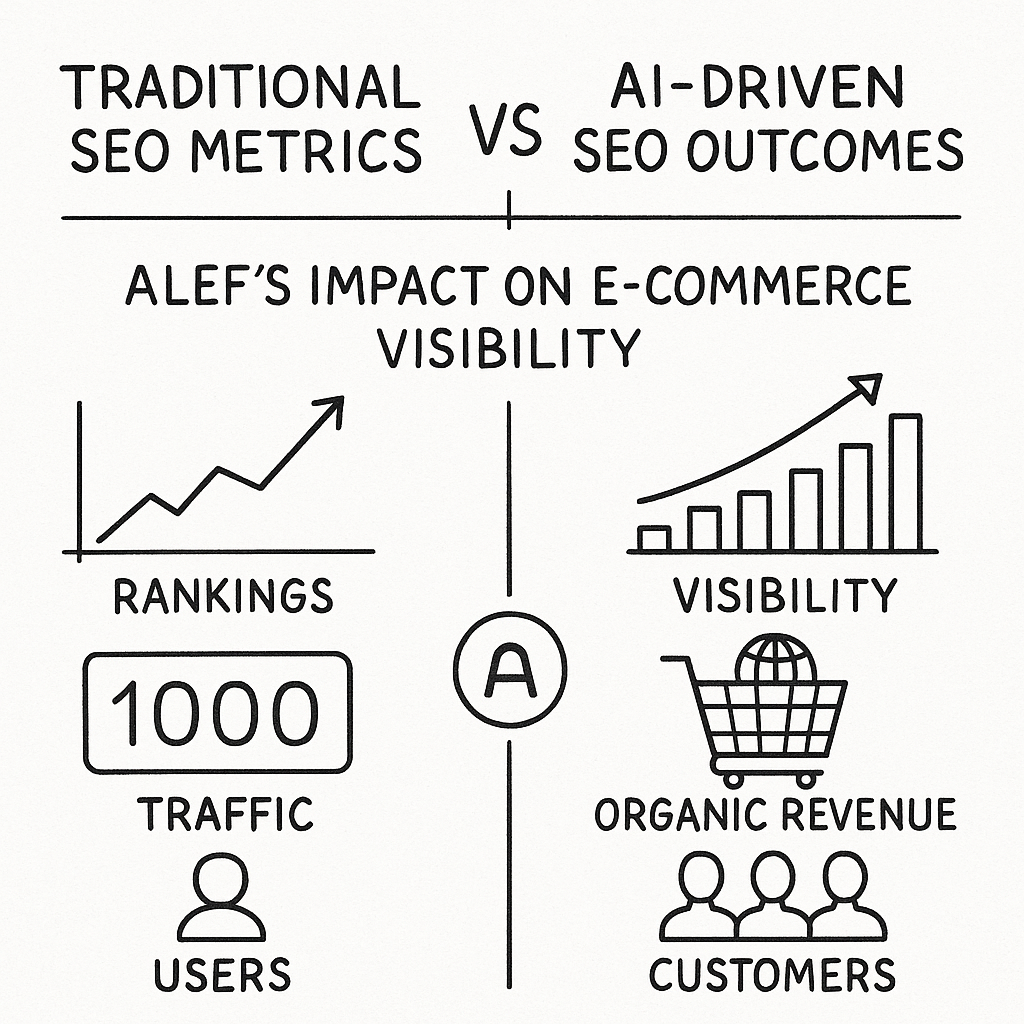
The integration of Alef SEO 2026 into e-commerce strategies is proving transformative across several key metrics. E-commerce brands are experiencing significant enhancements in visibility and engagement due to AI-driven SEO strategies. By leveraging AI, these brands are not only reaching a broader audience but also engaging them more effectively, translating into tangible business outcomes.
A crucial impact of Alef's tools is the notable increase in conversion rates. AI-driven SEO strategies allow for highly targeted marketing efforts, ensuring that the right consumers are reached at the right time. According to recent insights, sites employing AI-enhanced SEO have witnessed conversion rate improvements of up to 35% compared to traditional methods The new era of AI-powered search.
Moreover, Alef's tools provide measurable improvements in search rankings, a critical factor for e-commerce success. Brands utilizing Alef have reported a 25% increase in their search visibility, which directly correlates to higher customer acquisition rates What Search Engines Trust Now. For more insights into maximizing e-commerce success with Alef's AI SEO tools, explore this detailed guide.
| Segment Impact | Visibility Increase | Conversion Rate Improvement | Search Ranking Enhancement |
|---|---|---|---|
| E-commerce Brands | Up to 25% | Up to 35% | 25% |
These advancements underscore Alef's pivotal role in reshaping SEO for 2026, positioning e-commerce brands to thrive in an increasingly competitive digital landscape.
What it means for you
For e-commerce brands, the rapid evolution of AI-driven SEO trends in 2026 presents both a challenge and an opportunity. As AI technologies redefine search dynamics, brands must adapt swiftly to maintain and enhance their online visibility. This adaptation is not merely advantageous but essential for staying competitive in a market where AI-referred traffic is becoming a significant determinant of success. According to Search Engine Journal, search engines now prioritize authority and freshness, making it crucial for brands to align their strategies accordingly.
Leveraging Alef's advanced suite of tools offers a distinct competitive edge. By utilizing AI-powered insights and optimization strategies, e-commerce brands can ensure their content ranks highly on both traditional search engines and AI answer engines. Alef's platform enables businesses to monitor and optimize their content effectively, enhancing their visibility across diverse digital landscapes. For more on how to boost e-commerce AI-referred traffic, Alef provides in-depth strategies tailored to current trends.
Understanding these changes is pivotal for future success. As AI continues to influence search algorithms, brands that embrace these advancements will not only keep pace but also position themselves as leaders in their sectors. The ability to anticipate and adapt to these shifts will define the frontrunners in the e-commerce domain, ensuring sustained growth and market relevance.
Takeaway
Alef SEO 2026 is at the forefront of transforming how e-commerce brands approach digital visibility. By leveraging AI-driven tools, Alef empowers businesses to navigate the evolving landscape of search engine optimization. As search engines increasingly prioritize AI-based algorithms, adapting strategies becomes essential for maintaining competitive edge. Brands that embrace these changes can expect notable gains in both visibility and user engagement. For a deeper understanding of how Alef's innovative platform can revolutionize your SEO strategy, explore their insights and tools tailored for the future of search.
Key takeaways - Alef's AI-driven SEO tools are essential for modern e-commerce strategies. - The shift to AI-driven search requires new approaches to SEO. - Brands that adapt will see significant improvements in visibility and engagement.
Frequently Asked Questions
What is Generative Engine Optimization?
Generative Engine Optimization (GEO) refers to the process of optimizing content for AI-driven platforms that generate answers, such as ChatGPT and Perplexity. Unlike traditional SEO that focuses on improving rankings on search engines, GEO involves creating structured and semantically rich content that AI can easily interpret and use to generate accurate responses. This approach ensures that brands remain visible in AI-generated search results, which are increasingly becoming a critical component of digital visibility.
How do AI agents affect SEO strategies?
AI agents are transforming SEO strategies by prioritizing content that is not only relevant but also contextually rich and semantically structured. These agents use advanced algorithms to understand user intent more effectively, thereby impacting how content should be crafted. As AI agents become more sophisticated, they demand a higher level of content precision and relevance, pushing businesses to adopt strategies that focus on user experience and engagement. This shift means that traditional keyword-stuffing tactics are less effective, necessitating a more nuanced approach to content creation that aligns with AI preferences.
What role does structured content play in AI-driven SEO?
Structured content is pivotal in AI-driven SEO as it enhances the ability of AI algorithms to understand and process information efficiently. By using elements like schema markup and XML sitemaps, businesses can provide AI with clear signals about the context and relevance of their content. This structured approach not only improves indexation but also increases the likelihood of content being selected by AI agents for answer generation. Understanding the importance of structured content is crucial for businesses aiming to enhance their digital presence in AI-driven environments.
How can Alef's platform enhance my e-commerce visibility?
Alef's platform enhances e-commerce visibility by leveraging AI to optimize content and improve search engine rankings. By integrating advanced tools for content analysis, keyword optimization, and backlink building, Alef helps businesses maintain a competitive edge in the digital marketplace. The platform's ability to audit website health and track performance metrics also ensures that e-commerce brands can continuously adapt their strategies in response to evolving SEO trends as highlighted by industry experts. This comprehensive approach allows businesses to maximize their visibility and attract more qualified traffic.
Sources
Turn this article into a visibility plan
Use Alef to audit your site, find content gaps, and create briefs your team can ship.